
Rei Puta Meaning: The Whale Tooth Pendant of Rank and Mana
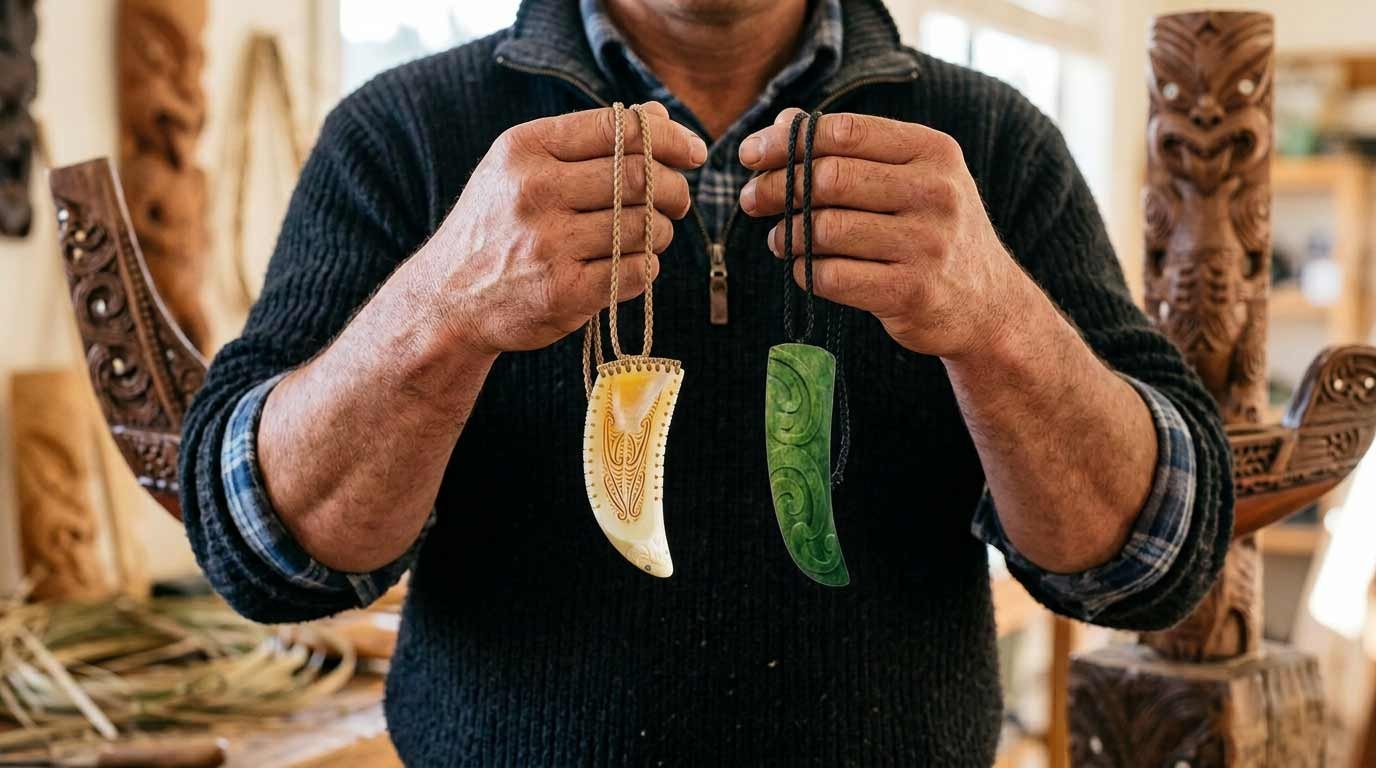
The rei puta is a pendant shaped like a sperm whale tooth, and one of the oldest pendant forms in Māori adornment. Historically carved from whale ivory and worn by men of high standing, it is now also carved in pounamu, keeping the tooth shape and its long association with rank and mana.
Unlike most pounamu designs, the rei puta did not begin in stone. Its form comes from the tooth of the parāoa (sperm whale), a rare and valued material in traditional Māori society. Understanding that origin is the key to understanding what the design means, and why it still carries such presence today.
This guide covers where the rei puta comes from, what it is generally understood to represent, and what to look for if you are choosing one in pounamu. For the wider story of the stone itself, see our guide to the history of pounamu.
What Is a Rei Puta?
A rei puta is an elongated, gently curved pendant modelled on the tooth of a sperm whale, known in te reo Māori as rei niho parāoa. It hangs from a cord threaded through one or more holes drilled near the top. Historical examples range from plain polished teeth to pieces with a stylised face and eyes engraved at one end.
The name is commonly explained as rei, meaning whale ivory or a treasured ornament, and puta, meaning hole. Read together, it describes what the pendant is: a piece of ivory pierced so it can be worn.
Origins: The Whale Tooth in Māori Adornment
Pendants made from sperm whale teeth have been found throughout New Zealand and are among the earliest known Māori ornaments. Whales were not actively hunted in traditional Māori society, so teeth came from stranded whales. That made whale ivory rare, and it is one reason whale tooth pendants were so highly valued. Where real teeth were not available, carvers made careful replicas in stone or bone.
By the 18th century, the rei puta had settled into the form most people recognise today: a single whale tooth, often engraved with eyes or a stylised face, worn by men of high status. Sydney Parkinson, the artist on James Cook's first voyage, drew a young man of rank from the Bay of Islands wearing one in 1769. Over time the rei puta became less common as the hei tiki grew in favour. Te Ara, the Encyclopedia of New Zealand, covers this history in its guide to Māori adornment. Read more: History of Pounamu.
Meaning: Rank, Mana and the Whale
The clearest association of the rei puta is status. Historically it was worn by men of rank, and it made that standing visible to everyone who saw it. That is why the design is still linked today with leadership, prestige, and the mana that comes from one's whakapapa.
The deeper original meaning is not fully known. Historians suggest a whale tooth pendant may have carried the mana of the whale itself, or marked a spiritual connection. Many Māori regard whales as tūpuna (ancestors) through Tangaroa, guardian of the sea, and carvers today often describe the rei puta as expressing that connection, along with strength and abundance. As with all pounamu designs, interpretations vary between iwi, carvers and wearers, and what matters most is approaching the piece with understanding and respect.
Rei Puta in Pounamu Today
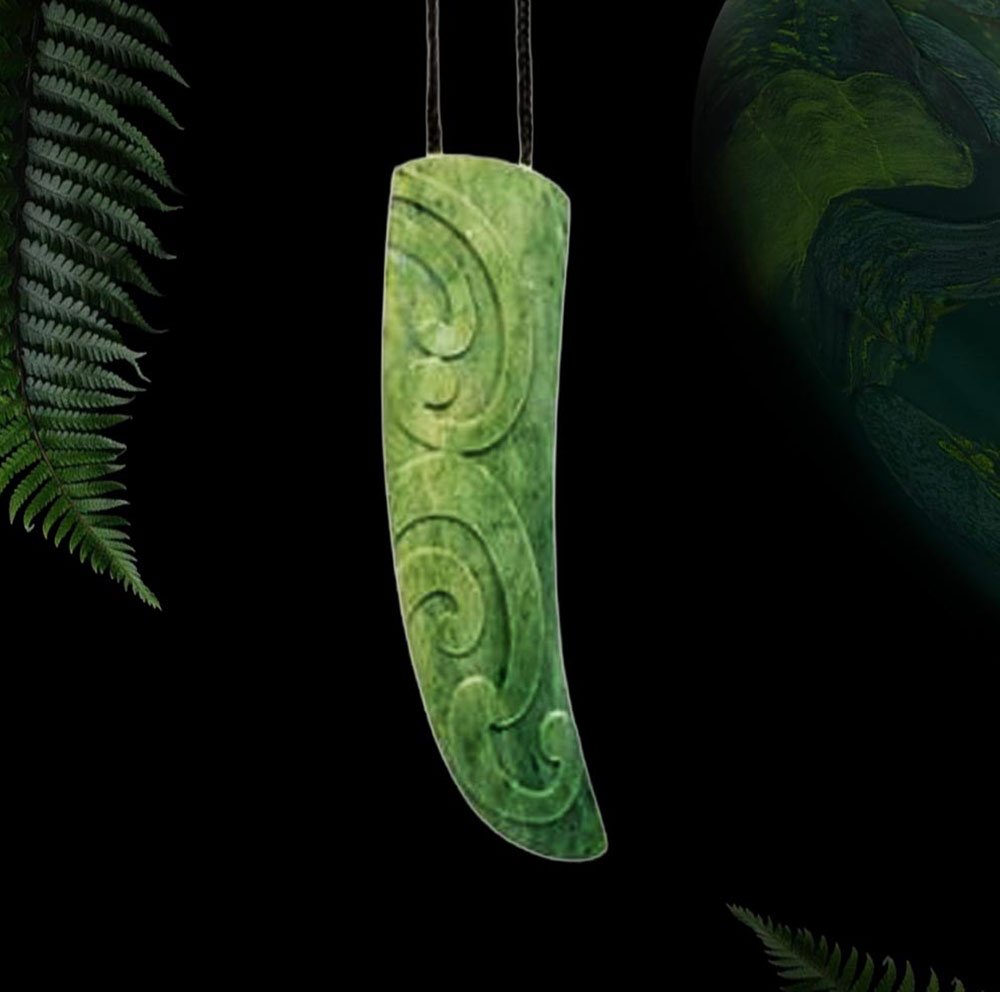
Whale ivory remains rare, and many rei puta made today are carved in pounamu instead. A pounamu rei puta keeps the curved tooth silhouette, so it reads clearly as a rei puta, while the stone adds its own colour and depth. Some carvers leave the surface plain to show off the stone; others add koru, chevrons or a stylised face drawn from historical pieces.
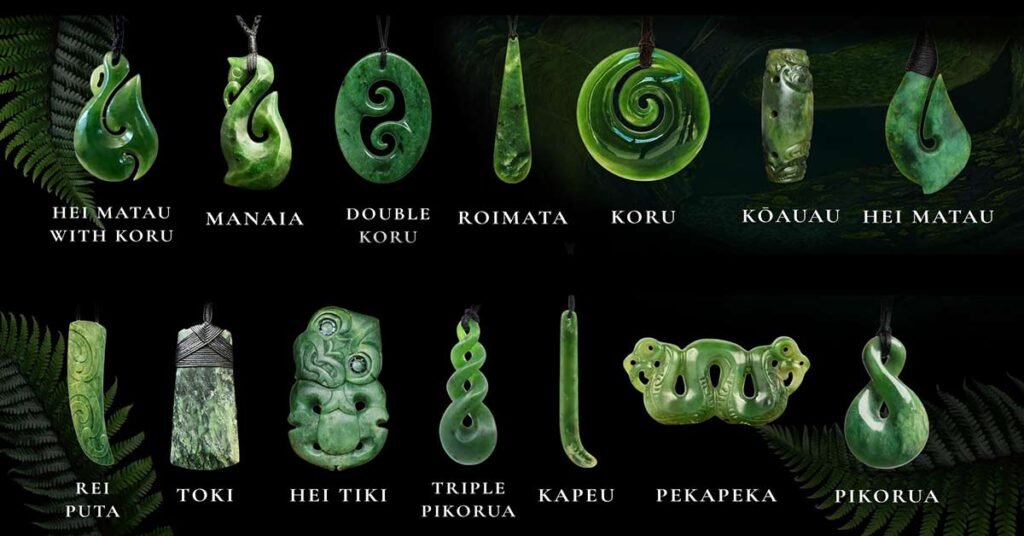
If you are drawn to designs connected with leadership and standing, the toki poutangata is another traditional form with strong associations of authority. Read more: Toki Poutangata.
Who Can Wear a Rei Puta?
There are no universal rules. Because of its historical link with rank, some people feel a rei puta carries particular weight, and Māori wearers may connect it directly to their own whakapapa. Today it is worn by people of many backgrounds who value its meaning. Learning about the design and wearing it with respect is what most carvers and practitioners encourage. Read more: Can Anyone Wear Pounamu?
Choosing a Pounamu Rei Puta
Because the rei puta is a simple, bold shape, the stone does most of the work. Look closely at colour, translucency and finish, and choose a size that suits the wearer, since a well-proportioned tooth form looks deliberate rather than small. Deep green kawakawa, translucent kahurangi and pale īnanga each give the design a different character. Read more: Types of Pounamu.
Buy from a carver or gallery that can tell you where the stone came from and who carved it. Given its associations, a rei puta can also be a meaningful gift to mark a new role or achievement. Read more: Gifting Pounamu.

Frequently Asked Questions About the Rei Puta
Rei is commonly translated as whale ivory or a treasured ornament, and puta as hole, so the name describes a piece of ivory pierced to be worn. As a design, the rei puta is a pendant in the shape of a sperm whale tooth, historically associated with rank and mana.
Traditionally, rei puta were carved from sperm whale teeth taken from stranded whales, which made them rare and valuable. Replicas were also made in stone and bone. Many rei puta made today are carved in pounamu, which keeps the curved tooth shape of the original.
Historically, the rei puta was worn by men of high status, and it was a visible sign of rank. Today it is worn by people of many backgrounds. There are no universal rules, but learning about its history and wearing it with respect is encouraged. See our guide to tikanga and cultural respect.
Many 18th century rei puta were engraved with eyes or a stylised face at one end. The exact significance of these faces is uncertain. Contemporary carvers sometimes include a face as a nod to these historical pieces, while others leave the tooth plain or add koru and chevron patterns.
Both are tooth designs. The rei puta refers specifically to the sperm whale tooth form and its historical association with rank. Niho is the broader word for tooth and is often used for other tooth pendants, such as shark tooth designs. Our niho guide covers that design and its meaning.
Because the rei puta is a simple shape, the quality of the stone shows clearly. Deep green kawakawa, translucent kahurangi and pale inanga are all used, and the right choice comes down to personal preference. Our guide to types of pounamu explains the differences.