
The Porohita: Completeness, Eternity & the Unbroken Circle
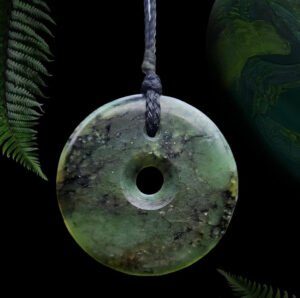
The porohita, also spelt porowhita, is the pounamu circle, and a pounamu circle pendant stands for completeness, eternity and the unbroken cycle of life. It is one of the most elemental and universal of all human symbols, given particular form and meaning in Māori culture. A perfect circle has no beginning and no end, no corner and no weakness, and in that completeness it speaks to continuity and the wholeness of existence.
Both spellings are correct. Te Aka Māori Dictionary lists porohita and porowhita as synonyms, each meaning circle, wheel or ring. In pounamu the design is also called a disc, and carvers make it as a solid disc or as a ring-like disc with a central or offset opening. A porohita carved in pounamu brings that meaning into a personal, wearable form. Read more: History of Pounamu.
The Circle in Māori Cosmology
Many carvers describe the porohita as a symbol of cycles. The sun and moon, Tama-nui-te-rā and Hina-te-marama, return across the sky, the seasons turn, the tides rise and fall, and life emerges, returns to the earth and emerges again. Carvers such as Sands Carving Studio describe the circle as the completion of cycles, while Campbell Carving also links it to the moon and to the journey of life, including health, relationships and the changing seasons.
Interpretations vary between carvers, iwi and wearers, and there is no single fixed meaning, but the idea of a form without beginning or end is widely shared. This cyclical thinking appears in other Māori designs too, such as the spiral of the koru, and the porohita expresses it in its purest and simplest form.
Meaning: Completeness, Wholeness and Continuity
The primary meaning of the porohita is completeness, the sense that something is whole, finished, and lacking nothing. This can apply to a person (someone who has achieved a sense of wholeness or equilibrium), to a relationship (one that is complete in itself), or to a phase of life (the sense that something has come full circle). Read more: Benefits of Wearing Pounamu.
Eternity is the other central meaning, the idea that the circle has no end and therefore represents something that persists beyond time. For those reflecting on legacy, on the relationship between generations, or on what endures beyond the individual life, the porohita offers a simple and profound symbol.
The Porohita and the Rei Puta
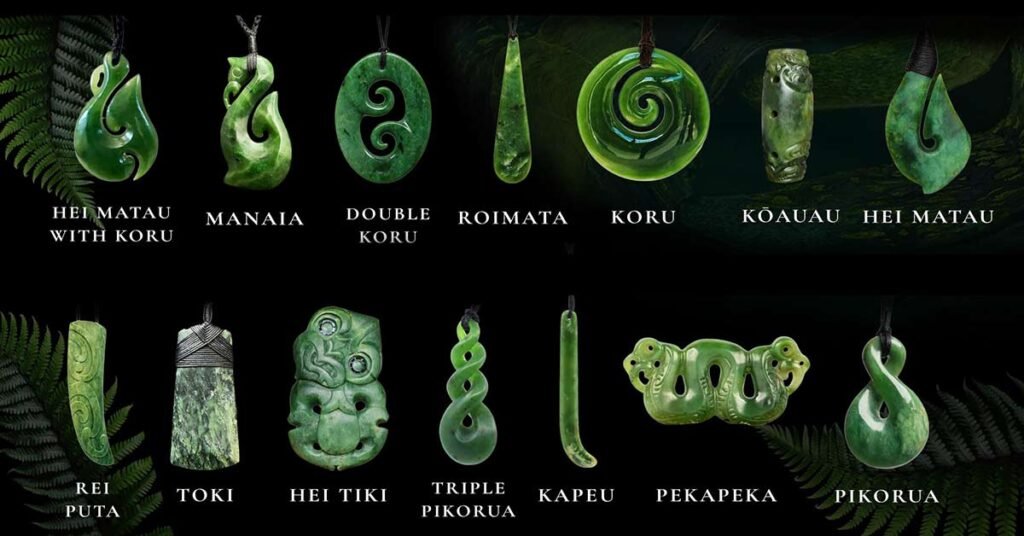
The porohita and the rei puta are two different designs. The porohita is a circle, a disc or ring-like form that symbolises completeness and eternity. The rei puta is a pendant shaped like the tooth of a sperm whale, one of the oldest forms of Māori adornment and traditionally linked with rank and mana. Read more: Rei Puta.
The difference is easiest to see in the shape. A rei puta is long and gently curved, while a porohita is round. Where a porohita has an opening, it sits in the middle of the circle or slightly off-centre, whereas a rei puta is hung from holes drilled near the top of the tooth form.
The porohita does belong to a wider family of circular and continuous forms in pounamu, designs that favour a flowing line over angular edges and express movement without an end.
Porohita as a Gift of Wholeness
The porohita is a meaningful gift for moments of completion and wholeness, a graduation, a major life achievement, a retirement, or any occasion where something has genuinely come full circle. It is also appropriate for someone who has been through a long and difficult process and emerged whole on the other side. The circle says: you are complete. Nothing is missing. Read more: Gifting Pounamu.
For those interested in a more minimalist design, one where the meaning comes from the purity of the form rather than the complexity of the carving, the porohita is among the most satisfying choices in the pounamu repertoire.
Porohita in Contemporary Pounamu Design
The porohita's simplicity makes it a design that translates easily into contemporary jewellery forms, pendants, earrings and rings. Its clean, universal form pairs well with modern settings and wears beautifully against both formal and casual clothing. The circle requires no context to be understood, making it one of the most accessible pounamu designs for those new to greenstone.
Carvers make the porohita as a solid disc, as a ring-like disc with a central opening, or with the opening offset to one side, and some add a carved detail such as a koru on the face.
Choosing a Pounamu Porohita
When choosing a porohita, the quality and character of the pounamu stone is paramount, because the design is simple, the stone's beauty is fully exposed. A porohita in kahurangi (vivid, clear green) is luminous and striking. One in highly figured kawakawa (dark green with inclusions) tells a complex visual story within a simple form. Translucent īnanga has a subtle, contemplative quality. Read more: Types of Pounamu.
In whatever stone it is carved, the porohita is a design of timeless authority, simple, complete, and carrying the meaning of eternity in a form that speaks without elaboration. Read more: What Is Pounamu?

Frequently Asked Questions About the Porohita
Porohita, also spelt porowhita, means "circle" or "disc." As a pounamu design, it symbolises completeness, eternity, and the unbroken cycle of life. It represents wholeness, something that is complete in itself and endures beyond time.
Both spellings are correct. Porohita and porowhita are two forms of the same te reo Māori word for a circle, and Te Aka Māori Dictionary lists each as a synonym of the other, meaning circle, wheel or ring. Carvers and jewellers use either spelling for the pounamu circle or disc pendant, so you may see both when searching.
The porohita is ideal for moments of completion: graduation, retirement, major life achievements, or any occasion where something has come full circle. It is also appropriate for someone who has endured a long journey and emerged whole on the other side.
They are different designs. The porohita is a circle or disc, solid or with an opening, symbolising completeness and eternity. The rei puta is a pendant shaped like a sperm whale tooth, traditionally associated with rank and mana in Māori society. Read more: Rei Puta.
Carvers commonly describe the circle as a symbol of cycles, including the sun and moon, the seasons and the stages of life. Interpretations vary between carvers and iwi, but the idea of a form with no beginning and no end is widely shared. The porohita gives that idea a pure, simple form.
Because the design is simple, the stone's quality is especially important. Kahurangi (vivid green) creates a luminous piece; highly figured kawakawa tells a complex story; translucent īnanga has a contemplative quality. Any quality pounamu makes a beautiful porohita. Read more: Types of Pounamu.
Yes, the porohita's clean, simple form makes it one of the most versatile pounamu designs for everyday wear. It works well in formal and casual settings alike, and its universal form makes it easy to wear and appreciate without cultural knowledge.
There is no standard price, because the value of a porohita depends on several things: the type of pounamu (rarer stones such as kahurangi and tangiwai generally cost more than common kawakawa), the size and thickness, the quality of the carving and polish, who carved it, and whether it comes with proof of authenticity. A piece by a known carver, or one authenticated through the Ngāi Tahu Pounamu scheme, is easier to value than an unmarked one. If you own or have found a circle pendant, first check that it is genuine with our guide on how to tell if pounamu is real, then ask a reputable carver or gallery from our directory.