
How to Choose the Right Pounamu Meaning
Choosing pounamu is never simply about selecting a beautiful stone. Every piece carries meaning, both in its design and in the relationship between giver and wearer. Whether you are gifting pounamu to honour a milestone, support someone through hardship, or celebrate new beginnings, the meaning you choose should resonate deeply with the occasion and the person receiving it. This guide will help you navigate the symbolic landscape of pounamu, ensuring that your choice reflects genuine connection and cultural respect.
The most powerful pounamu journeys begin with a single question: what story do I want this stone to carry? In Māori tradition, pounamu is a taonga, a precious treasure that holds mana (spiritual power). When you take time to match the design to the recipient's life circumstances, personality, and the bond you share, the pounamu becomes far more than jewellery. It becomes a guardian, a reminder, and a tangible expression of aroha (love and compassion). Understanding the language of pounamu meanings is the first step toward making a choice that will matter for generations.
Start with Occasion and Relationship
Before you fall in love with a particular design, pause and reflect on the moment. Are you marking a birthday, a graduation, a recovery from illness, or a wedding? Is the recipient your child, your partner, your best friend, or a colleague? The occasion and your relationship set the emotional context that will guide your choice.
For a first pounamu gift, something versatile and protective often works beautifully, a gentle introduction to the stone's mana. For someone facing a life transition, moving house, changing careers, or grieving, you might lean toward designs associated with strength or new beginnings. A partner might receive something symbolising eternal bond, while a newborn could receive a design celebrating growth and potential. Thinking about these layers ensures your choice feels intentional and deeply appropriate.
The relationship you share also matters. Gifting pounamu to a tūpuna (ancestor, elder) carries different weight than gifting to a child. Partners often exchange complementary designs that reflect their connection. Friendships might be honoured with designs celebrating loyalty and shared journeys. By anchoring your choice in the specific reality of your relationship, you create space for the pounamu to become truly meaningful.
Match Design Meaning to Personality and Life Stage
Once you understand the occasion, consider who the wearer is. Are they naturally bold and action-oriented, or thoughtful and introspective? Are they at the beginning of something new, in the thick of challenge, or celebrating achievement? Every pounamu design speaks to different inner truths and life circumstances, and the best matches feel like a natural fit.
Someone adventurous and independent might resonate with the hei matau, a fish hook symbolising safe passage, abundance, and connection to the ocean, or the toki, representing strength, leadership, and the ability to meet challenge head-on. A person going through a period of growth or healing might be drawn to the koru, a spiral representing new life, quiet potential, and returning to source.
Consider the recipient's values. Someone who treasures deep connection might find meaning in the pikorua, the twist design representing two paths bound together, or the triple pikorua for whānau unity. Someone protective by nature, drawn to guardianship and care, might be drawn to the manaia, a spiritual guardian associated with safe passage and watchful presence.
When design meets personality, the pounamu feels like it was always meant to find that particular person.
Protection, Strength, and Guidance Through Difficult Times
When someone you care about faces hardship, illness, loss, grief, or major life upheaval, pounamu becomes a wearable anchor. Certain designs carry protective mana and are traditionally chosen for people navigating darkness or uncertainty.
The manaia is perhaps the most recognised protector in pounamu tradition. This guardian figure watches over safe passage, shields against harm, and guides the wearer toward spiritual clarity. If someone is recovering from illness or facing a spiritually challenging time, a manaia held close to the heart offers both literal and energetic reassurance. The double manaia, two guardians facing outward, amplifies this protective power, offering shelter from multiple directions.
The hei tiki, a humanoid figure representing an ancestor or guardian spirit, is another profound choice for protection. Worn close, it can feel like carrying the strength of tūpuna (ancestors) with you. For someone in transition or upheaval, this ancestral presence is deeply grounding. Even simple designs like the toki, an axe representing the ability to cut through obstacles and clear a path forward, carry strength that resonates during difficult seasons.
The gift of protective pounamu says: you are not alone in this. You carry strength within you, and this stone holds the mana of those who love you. The physical weight and warmth of the stone against skin becomes a constant, gentle reminder of resilience and care.
New Beginnings, Growth, and Celebrating Bonds
Just as pounamu marks protection, it also celebrates transformation and the beauty of new chapters. The koru, a gentle spiral opening outward, is the universal symbol of new beginnings in Māori design. It represents the unfurling of new life, the return to source, and growth that spirals upward with grace. For someone starting a new job, moving to a new place, or stepping into a new phase of life, the koru feels like a blessing and a companion for the journey ahead. The double koru, representing two people growing together, makes a beautiful gift for newly bonded couples or friends entering a deeper phase of connection.
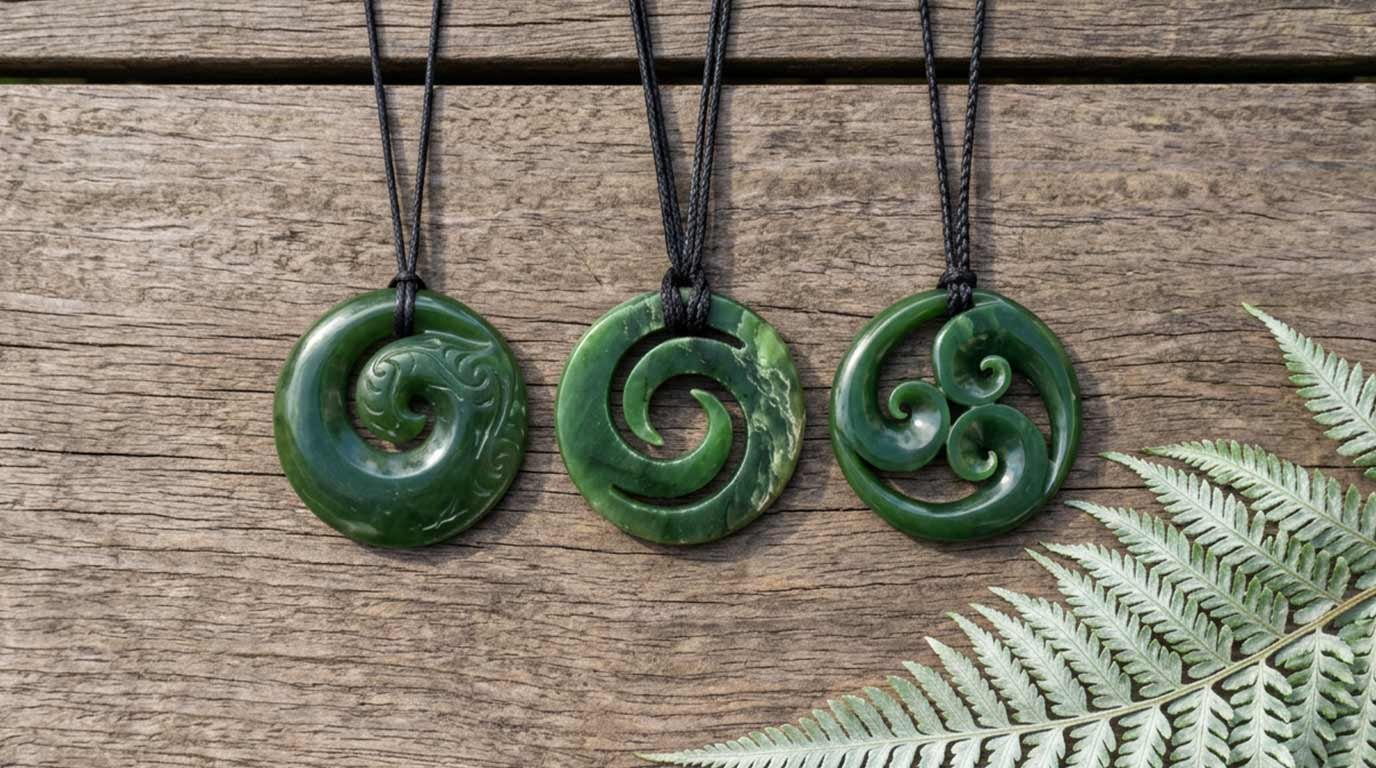
The pikorua celebrates eternal bonds across time and space. The design shows two people or energies intertwined, neither beginning nor ending, symbolising loyalty, partnership, and connection that endures. For couples, the pikorua is a classic choice. For best friends, chosen family, or any two people whose lives are deeply woven together, it honours the specific magic of that relationship. The triple pikorua extends this idea to whānau (family) unity and intergenerational bonds.
These designs work beautifully for life's bright moments: celebrating a birth (new potential), marking an anniversary, honouring a milestone, or simply saying I see you and I celebrate who you are becoming. When paired with the right stone type, kawakawa for calm grounding, kahurangi for spiritual clarity, or īnanga for gentle radiance, these designs create pounamu pieces that feel both celebratory and deeply personal.
Stone Type as Meaning: Kawakawa, Kahurangi, Īnanga, and Beyond
While design carries the primary meaning, the stone type itself adds another layer of significance. All pounamu is precious, but each variety carries subtle energetic and visual distinctions that can amplify or soften the design's message.
Kawakawa, the most common variety, is deep green with black inclusions that resemble ferns or rivers. It is grounding, protective, and earthy, ideal for designs celebrating strength, family, or stability. Kahurangi, the rarest and most prized, is a brilliant translucent green associated with spiritual clarity, enlightenment, and elevated consciousness. It commands reverence and is traditionally reserved for taonga of great significance or wearers stepping into spiritual leadership. Īnanga, pale green to almost white, carries a gentle, nurturing energy and is often chosen for designs celebrating new beginnings, healing, or tender strength. Read more: Types of Pounamu.
Understanding these stone types allows you to fine-tune your choice. A koru carved in kahurangi feels more spiritually elevated; the same design in kawakawa feels more grounded and ancestral. A manaia in īnanga feels gentle and healing; in kawakawa, it feels solid and immovable. When you match stone type to both design and recipient, you create a pounamu experience that feels complete.
The Gift as Ceremony: Why Pounamu Is Most Powerful When Given
One idea runs through much of pounamu tradition: a pounamu you receive is often considered to carry more mana than one you purchase for yourself. Many see this not as superstition, but as a reflection of the deep cultural understanding that meaning in a Māori worldview is fundamentally relational. When someone chooses pounamu specifically for you, they are investing intention, time, and aroha (love) into the gift. The stone carries the giver's understanding of who you are, what you need, and the bond you share.
Gifting pounamu is a ceremony, whether formal or quiet. When you present it, it is powerful to share the meaning you chose and why. Explain which design you selected and what it represents in the recipient's life. Tell them why this particular stone felt right for them. Create space for the pounamu to be received as the taonga it is, not mere decoration, but a meaningful guardian and companion.
If you wish to wear pounamu yourself, one approach some choose is to commission a carver with the intention that you are receiving pounamu through their hands, or to have it gifted to you by someone close. This honours the tradition while creating a bridge between self-love and relational meaning. When you understand pounamu as a language of connection, between giver and wearer, between wearer and ancestors, between wearer and purpose, every choice becomes an opportunity to strengthen bonds and affirm what matters most. Read more: Gifting Pounamu.
Frequently Asked Questions About Pounamu Meaning
Start with the occasion and your relationship to the recipient, then match a design's traditional meaning, such as protection, new beginnings, or connection, to their situation and personality.
Design carries the primary meaning, but stone type, such as kawakawa, kahurangi, or īnanga, adds a further layer: grounding, spiritual clarity, or gentle nurturing, respectively.
In Māori tradition, a piece received as a gift is generally considered to carry more mana than one bought for yourself, though many people do buy pounamu for themselves today, particularly from Māori carvers.
Yes, some designs blend meanings, such as the hei matau with koru, combining safe travel with growth. Carvers can also advise on custom combinations for a specific personal story.