
The Manaia: Guardian Spirit, Protector & Messenger Between Worlds
The manaia is one of the most spiritually significant figures in Māori art and culture. Rendered in pounamu, it appears as a creature of three realms: the head of a bird, the body of a human, and the tail of a fish. This composite form is not accidental — each element represents one of the three worlds that Māori cosmology recognises, and the manaia moves freely between all of them.
As a pounamu design, the manaia is a powerful protective tāonga. It is said to guard the wearer from negative forces, guide them through difficult transitions, and carry their prayers and intentions between the earthly world and the spiritual one. (read more: Benefits of Wearing Pounamu)

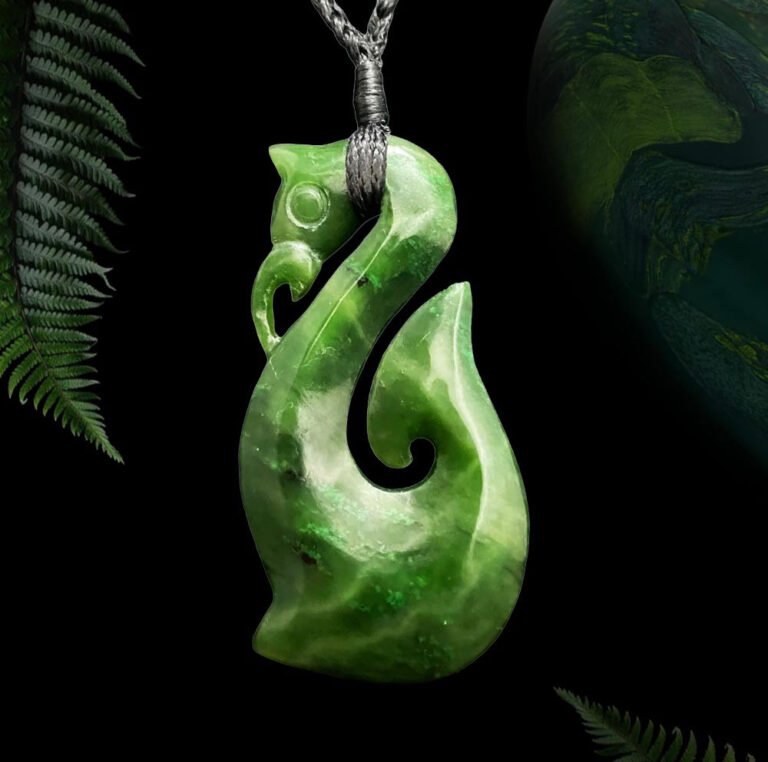
The Form of the Manaia: Three Worlds in One
The manaia’s distinctive form — bird head, human body, fish tail — maps directly onto the three great realms of existence in Māori cosmology. The bird represents the sky world (Ranginui), the domain of gods and the spiritual realm. The human body represents the earthly world, the realm of people and physical existence. The fish tail connects to Te Kore — the watery depths, the realm of the unconscious and of ancestors.
By embodying all three, the manaia is understood to have access to all three. It can carry messages to the atua (gods), protect the living from spiritual harm, and guide the souls of the deceased on their journey. It is both guardian and guide — a being that operates at the intersection of worlds.
Meaning: Protection, Guidance and Spiritual Power
The manaia’s primary meaning in pounamu is protection. Wearing a manaia is understood to place a spiritual guardian around the wearer — one that watches for danger from all three realms and deflects harm before it reaches the person beneath its care. This makes it an especially appropriate gift for someone facing difficulty or entering an uncertain period in their life. (read more: History of Pounamu)
The manaia is also associated with balance — the balance between different aspects of existence, between the spiritual and the physical, between speaking and listening. It reminds the wearer to move through the world with awareness, not just of what is seen but of what is unseen.
The Manaia in Māori Art and Carving
The manaia figure appears throughout Māori visual art — in the carved panels of wharenui (meeting houses), in the prow decorations of waka (canoes), and in tā moko (facial tattoo) designs. Its presence in these contexts is always protective. The manaia stood guard over sacred spaces, blessed journeys, and marked important thresholds.
In pounamu carving, the manaia is rendered in profile — the classic side-facing stance that makes its three-part form most readable. The best carvers bring life to the figure through the tension in its posture: alert, watchful, ready to act. A well-carved manaia feels genuinely present, as if it is watching over you.
Double Manaia: Two Guardians Facing Each Other
A variation of the manaia design places two figures facing each other — the double manaia. This amplifies the protective meaning: two guardians watching over the wearer from both directions, leaving no approach unguarded. The double manaia is also interpreted as the balance between opposing forces — the tension between them creating stability rather than conflict. (read more: Double Manaia)
Some designs combine the manaia with other forms — such as the hei tiki — to layer different protective meanings. The hei tiki represents ancestral connection; paired with a manaia, the piece becomes both a link to the past and a guard for the future. (read more: Hei Tiki)
Pounamu Resources
Explore authentic greenstone carvers, galleries and shops across New Zealand.
Who Should Wear a Manaia?
The manaia is a meaningful choice for anyone seeking protection, guidance through a period of change, or a deeper connection to the spiritual dimensions of life. It is particularly appropriate as a gift for someone who has experienced loss, is navigating a significant transition, or needs reassurance that they are watched over and cared for.
Choosing a Pounamu Manaia
Manaia pendants vary considerably in size and style. Smaller pieces are elegant and wearable every day. Larger manaia become statement pieces with a strong spiritual presence. The choice of pounamu stone also matters: dark kawakawa gives the manaia an authoritative, grounded energy, while translucent tangiwai lends it a more ethereal, otherworldly quality. (read more: Types of Pounamu)
Whatever form you choose, a pounamu manaia is a genuine protective tāonga — a guardian carved in stone, meant to watch over those who wear it. Few designs carry quite as much spiritual intention as this ancient and powerful figure. (read more: What Is Pounamu?)
Frequently Asked Questions About the Manaia
What does the manaia symbolise in pounamu?
The manaia is a guardian spirit figure combining bird, human, and fish forms. In pounamu, it symbolises protection, spiritual guidance, and the ability to move between earthly and spiritual worlds. It is one of the most spiritually powerful Māori designs.
What are the three parts of the manaia?
The manaia has the head of a bird (representing the sky and spiritual realm), the body of a human (representing the earthly realm), and the tail of a fish (representing the watery depths and the realm of ancestors). Each part reflects one of the three great realms of Māori cosmology.
Is the manaia a good gift for someone going through difficulty?
Yes — the manaia’s primary meaning is protection and guidance, making it a deeply thoughtful gift for someone facing hardship, uncertainty, or a significant life transition. It says: you are watched over and protected.
What is the double manaia?
The double manaia features two guardian figures facing each other. This amplifies the protective energy — two guardians watching from all directions — and also symbolises balance between opposing forces. (read more: Double Manaia)
How is the manaia different from the hei tiki?
The hei tiki is a human-form figure associated with ancestors and fertility. The manaia is a composite spirit figure (bird/human/fish) associated with protection and spiritual guardianship. Both are powerful protective designs but with distinct meanings and origins.
How do I care for a pounamu manaia?
Rinse gently in fresh water and dry with a soft cloth. Avoid exposure to harsh chemicals, perfume, and prolonged sunlight. Store in a soft pouch when not wearing. (read more: How to Care for Pounamu)