
The Kōauau: Breath of Life, Harmony & Connection in Pounamu
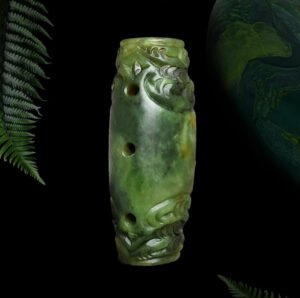
The kōauau is one of the most distinctive pounamu designs, shaped after the small end-blown flute of the same name that was central to Māori music and spiritual life. Unlike most pounamu pendants, the kōauau is not merely symbolic in form, it is literally an instrument, pierced with holes and capable of producing sound. In this sense, it bridges the world of taonga tuku iho (cultural treasures passed down) and living practice.
Breath is life. In Māori tradition, the breath (hā) that flows through an instrument like the kōauau is not merely air, it is the life force of the player, given form through sound and sent out into the world. Playing a kōauau was an act of spiritual communication as much as musical expression. (read more: History of Pounamu)
The Kōauau as a Musical Instrument
The kōauau is a short, cylindrical flute, typically 10–15 cm long, with three finger holes and an open upper end that the player blows across obliquely. Unlike the European transverse flute, the kōauau produces a breathy, intimate tone that reflects the closeness of the player’s breath to the instrument’s mouth. In traditional Māori music, it was used in personal expression, courting, and ceremony.
Kōauau were made from bone, wood, and pounamu. Those carved from greenstone were among the most precious, not only for the rarity and beauty of the material, but because pounamu was understood to absorb and hold the energy of those who played it. A pounamu kōauau used across generations became a living archive of the breath and music of those who came before.
Meaning: Breath, Communication and Harmony
The kōauau’s primary meaning as a pounamu design is the breath of life, the hā that connects us to the living world and to the spiritual realm. Breath is the first and last thing: it marks the entry into life and the departure from it. To wear a kōauau is to carry a reminder of this most fundamental of life forces. (read more: Benefits of Wearing Pounamu)
The design also carries the meaning of communication, specifically, the ability to bridge worlds through expression. Music, voice, and breath are all forms of communication that cross boundaries that other forms of language cannot. The kōauau honours the power of creative expression and the ability to make oneself heard and felt.
The Kōauau and Māori Ceremony
In traditional Māori society, the kōauau was played in a range of ceremonial and intimate contexts. It was used in pōwhiri (welcome ceremonies), in tangi (funeral observances), and in personal expressions of longing and love. Its small, intimate scale meant it was often played close to the face, a personal instrument as much as a public one.
The act of playing a pounamu kōauau was understood to create a direct channel between the player and the spiritual world. The breath flowing through the stone carried the player’s intentions into a realm beyond the physical. This gave the instrument genuine spiritual power that extended well beyond its musical function.
Kōauau as a Wearable Pendant
Today, most pounamu kōauau are worn as pendants rather than played as instruments, though functional versions are made and treasured. The pendant form captures the shape of the instrument in a wearable tāonga, carrying its meanings of breath, communication, and spiritual connection without requiring the wearer to be a musician. (read more: Porohita)
As a gift, the kōauau is particularly meaningful for musicians, artists, teachers, communicators, or anyone whose work involves using their voice and expression to reach others. It honours the power of communication as a spiritual act, not merely a practical one. (read more: Gifting Pounamu)
Pounamu Resources
Explore authentic greenstone carvers, galleries and shops across New Zealand.
The Kōauau and the Haka
The kōauau sits within a broader tradition of Māori performing arts, a tradition that includes the haka, waiata (song), and various forms of instrumental music. All of these arts involve the breath, the voice, and the body as instruments of spiritual expression. The kōauau, as the most intimate of the traditional Māori instruments, represents the personal dimension of this tradition.
Choosing a Pounamu Kōauau
Kōauau pendants come in both functional (playable) and purely ornamental forms. A functional pounamu kōauau is a more elaborate and expensive piece, requiring precise carving to produce musical tones. As a pendant, the kōauau works well in a range of pounamu types — translucent stones like tangiwai have an ethereal quality that suits the instrument’s spiritual associations. (read more: Types of Pounamu)
Whatever form you choose, the kōauau is a design of genuine depth, one that carries the living tradition of Māori musical expression and the ancient understanding that breath is life. (read more: What Is Pounamu?)
Frequently Asked Questions About the Kōauau
What is a kōauau in Māori culture?
The kōauau is a traditional Māori end-blown flute, played by breathing across an open hole at one end. It was used in ceremony, personal expression, and spiritual practice. In pounamu, it represents the breath of life, communication, and harmony.
Can a pounamu kōauau actually be played?
Yes — functional pounamu kōauau are made with precisely placed finger holes that produce musical tones. These are more complex and expensive to carve. Many pounamu kōauau are worn as pendants rather than played, but both forms are authentic tāonga.
What does the kōauau symbolise as a pounamu design?
The kōauau symbolises the breath of life (hā), communication, harmony, and the ability to bridge the human and spiritual worlds through creative expression. It is associated with music, voice, and the power of breath as a life force.
Who is the kōauau a good gift for?
The kōauau is a deeply meaningful gift for musicians, artists, teachers, public speakers, or anyone whose work involves using their voice and creative expression to connect with others. It honours communication as a spiritual gift.
What stone is best for a kōauau pendant?
Translucent stones like tangiwai or pale īnanga complement the kōauau’s spiritual associations beautifully. The stone’s quality is especially important in a functional kōauau, where the material’s acoustic properties also matter. (read more: Types of Pounamu)
Is the kōauau related to other Māori musical instruments?
Yes — Māori had a range of traditional musical instruments including the pūtōrino (bugle flute), nguru (nose flute), and pūkāea (long trumpet). The kōauau was among the most personal and intimate, often associated with love songs and private ceremony.