
Niho Meaning: The Tooth Pendant of Strength & Courage
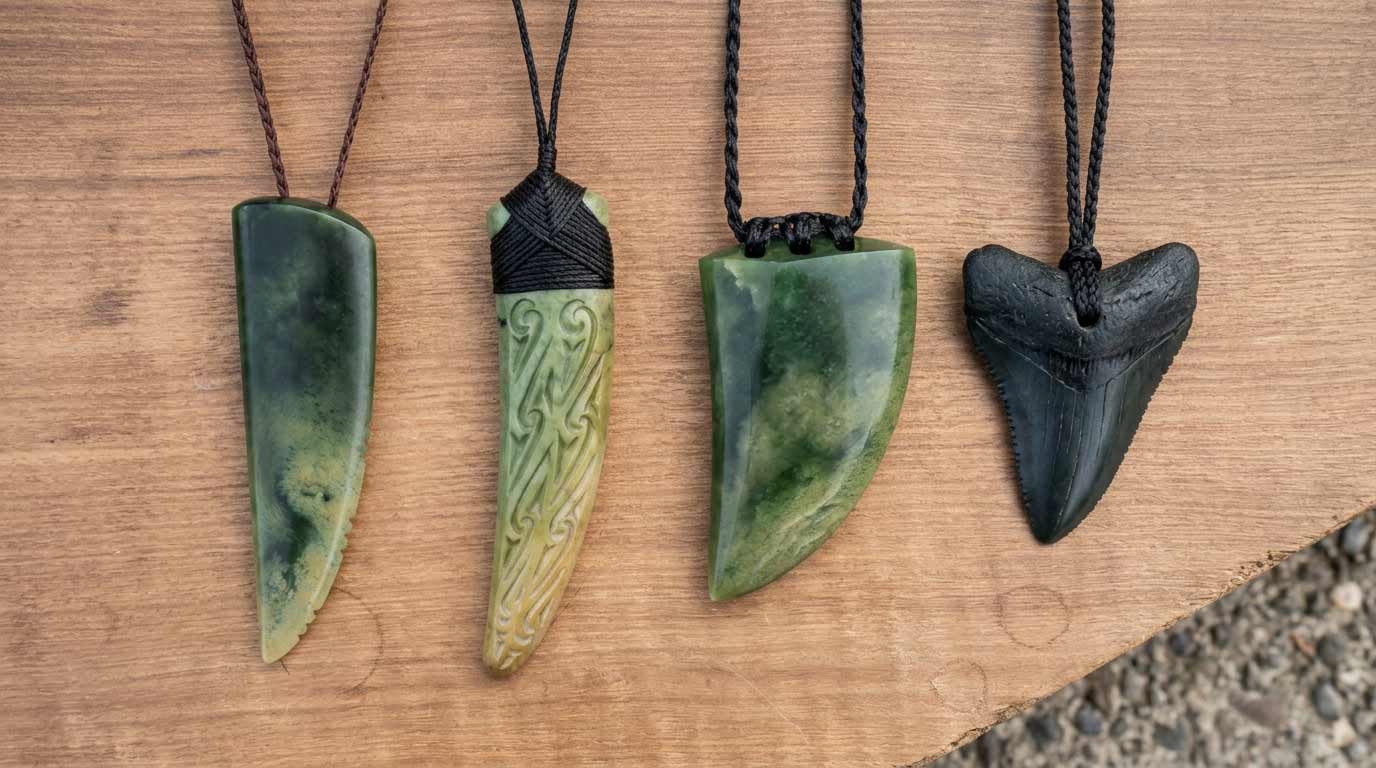
Niho means tooth in te reo Māori. As a pounamu design, the niho is a tapering, tooth-shaped pendant, most often modelled on a shark tooth, and it is associated with strength, courage and determination.
Tooth ornaments are among the oldest forms of Māori adornment, and shark teeth in particular were highly prized. Carving that shape in pounamu turns a natural object into a lasting taonga that carries the same associations. Read more: History of Pounamu.
This guide covers where the niho comes from, what it is commonly understood to mean, and how it differs from the rei puta, the whale tooth form.
The Tooth in Māori Adornment
Tooth pendants appear in the earliest forms of Māori adornment and reflect a wider Pacific heritage. Drilled shark teeth were strung on necklaces, and shark teeth were especially popular as ear pendants. Teeth from the mako (shortfin mako shark) and the white shark were favoured.
According to Te Papa, these shark tooth ear pendants were highly valued and were often passed down from generation to generation. Imitations carved from stone, including tangiwai (bowenite), were prized as well, which shows how much the shape itself mattered. Te Papa holds several examples in its collection of mako ear pendants.
Meaning: Strength, Courage and Determination
Sharks were respected as powerful predators, and Māori admired the way a shark fights to the end. A well-known whakataukī (proverb) makes the point: "Kaua e mate wheke, me mate ururoa", don't die like an octopus, die like a hammerhead shark. In other words, face a challenge with full resistance rather than giving up.
That spirit is what the niho carries today. It is commonly associated with strength, courage, resilience and determination, and some wearers also see it as a symbol of protection. As with all pounamu designs, meanings vary between carvers and wearers. Read more: Benefits of Wearing Pounamu.
Niho Mako: The Shark Tooth Form
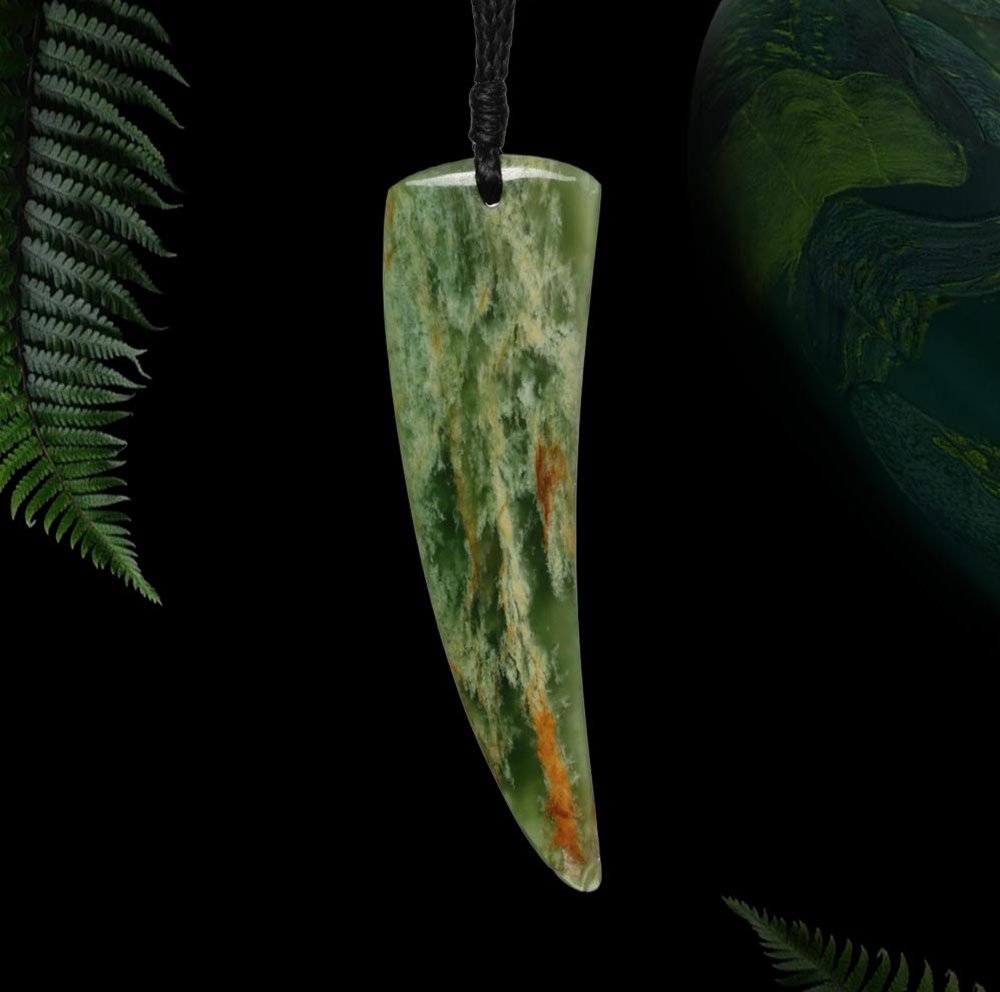
The most common niho is the niho mako, modelled on the tooth of the mako shark, one of the fastest sharks in the ocean. The word mako is also used for the traditional shark tooth ear pendants themselves. A pounamu niho mako has a clean, tapering silhouette, and it is often chosen by people who want a reminder of their own strength and drive.
Niho and Rei Puta: Two Different Teeth
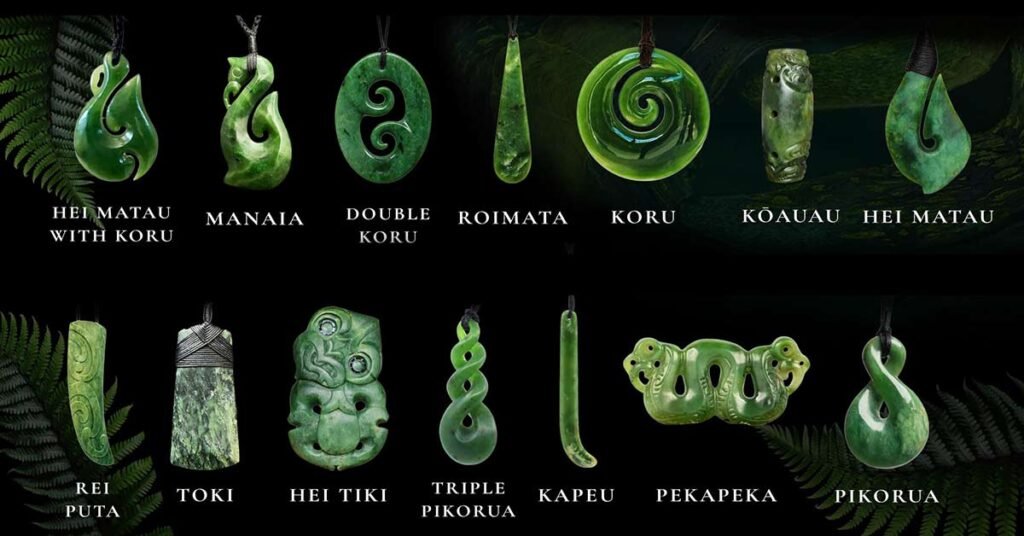
Not every tooth pendant is a niho in the usual sense. The pendant modelled on a sperm whale tooth has its own name, rei puta, and its own history as a symbol of rank worn by men of high status. If you are drawn to the whale and its associations with ancestry and mana, the rei puta is the design to look at. Read more: Rei Puta.
For a design connected to the sea in a different way, the hei matau (fish hook) is linked with abundance and safe travel over water. Read more: Hei Matau.
Wearing and Choosing a Niho
The niho is a bold, simple shape, usually worn on its own as a single pendant. Because the form is plain, the stone does a lot of the work. Deep green kawakawa gives a strong, serious look, while stones with flecks or patterns add interest to the clean tapering line. Read more: Types of Pounamu.
A niho makes a meaningful gift for someone facing a challenge, starting something demanding, or marking a hard-won achievement. Read more: Gifting Pounamu.
Frequently Asked Questions About the Niho
Niho means tooth in te reo Māori. As a pounamu design, the niho is a tooth-shaped pendant, usually modelled on a shark tooth, associated with strength, courage and determination.
A niho mako is a pendant modelled on the tooth of the mako shark. The word mako was also used for traditional shark tooth ear pendants, which were highly valued and often passed down through generations.
Niho is the general word for tooth and most niho pendants are based on a shark tooth. The rei puta is specifically the sperm whale tooth form, historically worn by men of high status. Read more: Rei Puta.
Yes. Shark teeth, especially from the mako and white shark, were worn as ear pendants and on necklaces. Stone imitations, including some made from tangiwai, were also highly prized.
A niho suits someone who has shown resilience, is facing a challenge, or is starting something demanding. Its message is strength and courage.
Any good-quality pounamu works. Deep green kawakawa gives a strong, serious look, while flecked or patterned stone adds interest to the simple shape. Read more: Types of Pounamu.