
What Happens If Pounamu Breaks?
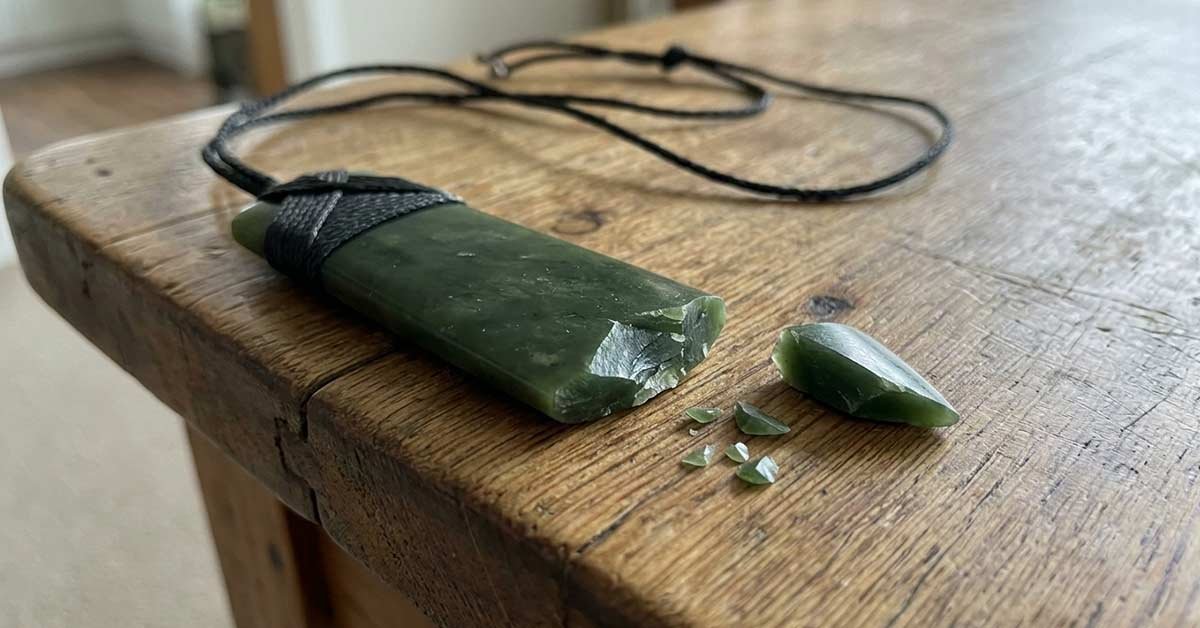
When a piece of pounamu breaks, it often marks a significant moment in the wearer's life. Rather than being dismissed as mere physical damage, many people who work with pounamu see breakage as a meaningful event, laden with spiritual significance and purpose. The stone may have been protecting you from something, absorbing an impact that could have affected you directly, or marking a major life transition. This perspective transforms what might otherwise feel like loss into an understanding of completion and protection. For many Māori whānau, a broken piece of pounamu is seen not as a tragedy but as a sign that the taonga has done its mahi, its work, and fulfilled part of its purpose in your life.
Breaking is far more common than many people realise, and understanding what it means can help you process the experience with grace rather than distress. Pounamu is an incredibly hard stone, but it is also brittle in specific ways, meaning it can fracture suddenly under sharp impact or stress. A piece dropped on a hard floor, caught on fabric, or subjected to sudden pressure may break cleanly. This physical vulnerability sits alongside the stone's spiritual significance for many wearers, creating a paradox: the more valued the relationship between person and pounamu, the more meaning people often find in the stone bearing the weight of that connection.
The Māori Understanding of Breakage
In Māori culture, the breaking of a piece of pounamu is often understood through the lens of the stone's mana and its relationship with the wearer. Many believe the stone does not lose its mana when it breaks, any more than a person loses their strength when they fall ill or face hardship. In this view, the nature of that mana shifts. A broken piece has demonstrated its willingness to protect, to absorb, to transform. Ngāi Tahu kōrero, the stories and knowledge passed down through generations, speak of pounamu as a living presence in people's lives. When it breaks, it is often seen as having intercepted something on behalf of the wearer, whether that is a physical accident, an emotional burden, or a spiritual challenge. For many, the breakage is evidence of the stone's loyalty and power, not a failure.
This perspective creates a profound shift in how people experience the event. Instead of shame or bad luck, many find themselves grateful to the stone for its service. Some whānau hold ceremonies or karakia, prayers and incantations, to acknowledge the stone's mahi and to release it with respect if it no longer feels right to wear. Others keep the broken pieces as a record of their journey, a physical reminder of a time when they needed protection most. The relationship does not necessarily end when the stone breaks, for many it transforms into something different, something equally meaningful. Read more: History of Pounamu.
Breakage as Protection and Transition
Many people report that they broke a piece of pounamu during a difficult time, or that the breakage coincided with a major life change. Some describe it as a protective sacrifice, the stone stepping in to shield them from something worse. Others experience it as a marker, a physical punctuation in the story of their life, signalling that one chapter is closing and another is beginning. A student might break their pounamu on the day they move away from home. Someone might drop and fracture their pendant during a conflict that later resolves in their favour. A person grieving a loss might find their piece shattered on the day they finally begin to heal. For many, these alignments feel too precise to be coincidence, and the spiritual interpretation gives the breakage meaning rather than leaving it as a senseless accident.
The concept of transition is especially important in Māori culture, where change is often seen as a natural and necessary part of existence. A broken piece of pounamu can represent the end of a particular season in your life, or the breaking down of something old so that something new can grow. This is not inherently negative. A chrysalis must break for a butterfly to emerge. A seed must split open for a plant to grow. In the same way, many see the breaking of pounamu as a signal of growth, evolution, and the wearer's own increasing strength. The stone has done its work, and now you are ready to continue without it, or with a new piece that represents who you have become. Read more: Benefits of Wearing Pounamu.
The Physical Reality of Breakage
Pounamu is one of the hardest stones used in jewellery and carving, ranking 6 to 6.5 on the Mohs hardness scale, comparable to or exceeding many common steels in scratch resistance. However, hardness and brittleness are two different properties. A stone can be extremely hard but still prone to fracturing if it is struck at the right angle or with enough force. Pounamu's crystalline structure gives it this characteristic, meaning that while it resists scratching and general wear beautifully, it can break suddenly if subjected to sharp impact or torsional stress. A piece may survive being dropped once and shatter the next time it hits the floor. A pendant caught on a doorframe or sharp edge might fracture despite its hardness. Prolonged exposure to extreme temperature changes can also create internal stress that eventually leads to breakage, though this is less common in New Zealand's relatively temperate climate.
Understanding the physical reasons for breakage helps normalise the experience. It is not a reflection of poor quality or weak craftsmanship. Even the finest pounamu pieces, carved by master artisans, can break under the right conditions. Many carvers expect that pieces may break at some point during their lives, and they see this as part of the stone's journey rather than a flaw. The way a piece breaks also tells a story. A clean fracture suggests a sudden impact. A piece that shatters into multiple fragments may indicate stress that accumulated over time. Some fractures reveal the internal structure and colour of the stone in unexpected ways, creating patterns that are themselves beautiful and meaningful. Read more: How to Care for Pounamu.
What to Do With a Broken Piece
Once a piece of pounamu breaks, you have several meaningful options for how to honour it. The first decision is whether to keep the piece or let it go. Keeping it allows you to maintain the relationship with the stone and honour what it has done for you. Broken pieces can be placed on an altar, displayed in a special place in your home, or carried in a pouch as a reminder of your journey. Some people keep all their broken pieces together, creating a collection that represents the chapters and challenges of their life. This practice is deeply personal and there is no right or wrong answer, only what feels true for your own relationship with the stone.
If you choose to return the stone to the natural world, water is a traditional choice for many. Many people take their broken pounamu to a river, stream, or the ocean and release it with intention and gratitude. This can feel like a completion of a cycle, allowing the stone to return to the landscape from which it came. Some perform a simple karakia or speak words of thanks as they do this, creating a ceremony that honours the stone's service. Others prefer to bury their broken pounamu in earth, particularly if they have a garden or meaningful land connection. The key is to approach the decision with intention and respect, acknowledging the significance of what the stone has meant to you. There is no rush to decide immediately. You may choose to sit with a broken piece for weeks or months before deciding what feels right. Read more: Gifting Pounamu.
Repair and Reworking: Giving Broken Pounamu New Life
A broken piece of pounamu does not have to remain broken in the form you inherited. Many skilled pounamu carvers offer reworking services, taking a piece that has fractured and reshaping it into something new. A pendant that broke at the bail can become a smaller pendant or a piece of jewellery with a fresh design. Multiple fragments can sometimes be combined or polished into a smooth, palm-sized stone that fits comfortably in your hand. Reworking requires genuine skill, as the carver must assess the internal integrity of the stone, understand where new fractures might occur, and redesign the piece to be both beautiful and resilient. The process can be slower and more expensive than creating something from raw pounamu, but it carries profound meaning: you are not discarding the original stone, but rather collaborating with a carver to give it a second life.
When you choose to rework a broken piece, you become part of a creative process that mirrors renewal and transformation. The original carver's mahi, their work and intention, merges with that of the new carver. The stone retains its history while gaining a new form and purpose. Some people find this deeply healing, especially if the breaking felt traumatic or sudden. The act of commissioning a new design gives you agency and choice in how the stone's story continues. You might choose a design that reflects who you have become since the breaking, or one that acknowledges the challenge you faced. The resulting piece becomes a testament not only to the stone's strength but to your own resilience and willingness to transform alongside it.
Processing Emotion and Finding Meaning
It is entirely normal to feel a sense of loss or grief when a piece of pounamu breaks, especially if you have worn it for a long time or received it as a significant gift. The emotional response is valid, even when you understand intellectually that breaking may have served a protective purpose. You may feel that you have lost something precious, or that you failed to care for it properly. These feelings deserve acknowledgement rather than dismissal. Grief for a broken taonga is grief for a relationship, a time in your life, and the particular way the stone held meaning for you. Allowing yourself to feel this emotion fully, without rushing to reframe it as positive, is an important part of processing the experience.
Over time, many people find that the initial disappointment transforms into gratitude and understanding. The broken piece becomes a symbol of survival, proof that you made it through whatever challenge coincided with the breakage. Some people develop rituals around their broken pounamu, lighting a candle in front of it on difficult anniversaries, or speaking to it when they need to remember their own strength. Others find that holding or looking at a broken piece anchors them to the present moment and reminds them of how far they have come. The meaning you create around a broken piece is as valid and powerful as the meaning you held for it before the breaking. For many, the stone's mana has not diminished, it has simply taken a different form, one that reflects your own journey and resilience. Read more: What Is Pounamu?
Questions About Broken Pounamu
Generally not. Breaking pounamu is not typically considered bad luck in Māori culture; instead, it's commonly understood as the stone having done its protective mahi, its work. Many see breakage as evidence the pounamu absorbed or intercepted something on the wearer's behalf, whether physical, emotional, or spiritual. Views can vary between individuals and iwi, but the breaking is rarely treated as an ill omen.
Many see it as the stone completing part of its purpose, having absorbed or intercepted something on the wearer's behalf, whether a physical accident, an emotional burden, or a marker of a life transition. Interpretations vary between people and whānau, and there's no single fixed meaning.
There's no single right answer. Many people keep the piece as a memento or have it reworked into something new, while others return it to water or earth with a karakia as a way of releasing it with gratitude. What feels right is a personal decision.
Yes. Skilled carvers can often rework a broken piece into a new, smaller design, though this requires the carver to first assess the stone's remaining structural integrity before deciding on a new form.
Not under normal wear, but its hardness doesn't mean it's unbreakable. Sharp impacts or sudden pressure can cause it to fracture suddenly, even though it resists everyday scratching and general wear very well.
There's no fixed rule against it, though many people choose to have a broken piece reworked into a new form before gifting it, since giving it as-is may carry a different meaning depending on the recipient's own beliefs and expectations.