
How Pounamu Is Carved
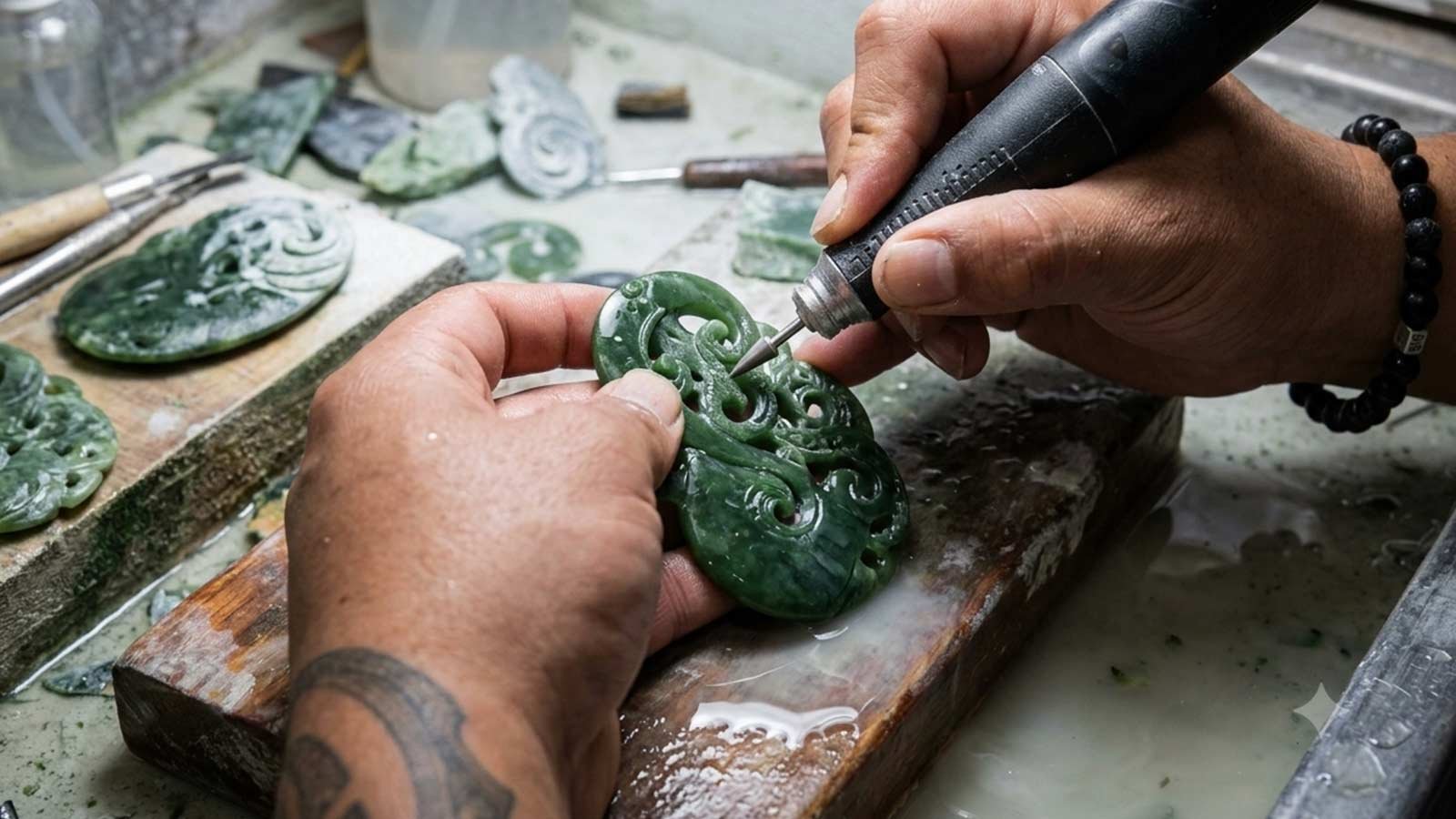
Pounamu carving is an ancient craft that demands patience, skill, and deep respect for the stone. Whether shaped by Māori masters centuries ago or contemporary artisans today, the process of transforming rough greenstone into a finely polished taonga reveals the extraordinary qualities of this remarkable stone. From the first strike to the final lustrous finish, every stage of pounamu carving tells a story, of the stone itself, of the carver's vision, and of the time invested in revealing the beauty within.
What makes pounamu carving truly unique is the relationship between maker and material. Many Māori carvers speak of the design already existing within the stone, waiting to be revealed rather than imposed. This philosophy shapes every decision: how the light catches the grain, where natural colour variations sit, how the final form will move and rest in the hand. Understanding pounamu carving means understanding both the science of working with one of the hardest stones on Earth and the spiritual dialogue between artist and taonga.
Why Pounamu Is So Hard to Carve
Pounamu is exceptionally difficult to work with, rated between 6 and 6.5 on the Mohs hardness scale. For context, quartz sits at 7 and diamond at 10, so pounamu is harder than most gemstones but still workable by skilled hands and modern equipment. This hardness comes from its dense structure: pounamu is primarily composed of interlocking mineral fibres, chiefly nephrite jade, though the related stone bowenite (also known as tangiwai) is considered pounamu in Māori tradition despite being a different mineral. This structure creates a stone that resists abrasion and is almost impossible to fracture cleanly. Traditional carvers needed immense physical strength and patience. A single pendant might require four to six months of work; larger pieces or intricate designs could take years.
The hardness also means pounamu requires constant cooling during carving. When grinding or polishing, friction generates heat that can cause the stone to crack or shatter without warning. This is why water is not optional, it is essential. Water keeps the stone at a safe temperature and washes away stone dust, allowing the carver to see the work clearly. Modern carvers use water-fed grinding wheels and cooling systems; traditional craftspeople used streams, bowls of water, and constant attention. The hardness, paradoxically, is also pounamu's gift: it holds fine detail, takes an exceptional polish, and endures for generations without dulling or fading.
Reading the Stone Before Carving Begins
Every piece of pounamu is different, and skilled carvers begin not by imposing a design but by studying the stone. They examine the colour, whether it's the deep bottle-green of Piopio pounamu, the pale celadon of kawakawa, or the luminous translucency of Aotea. They trace the grain with their eyes and hands, looking for natural striations, inclusions, or colour variations that can be worked into the design rather than removed. Some stones reveal their shape immediately; others require days of contemplation. This practice aligns with Māori philosophy: the carver reads the mauri (life force) of the stone and responds to it.
Inclusions, small flecks of darker stone, iron oxide, or other minerals, are not flaws to hide. Talented carvers often build them into the final design, making them part of the piece's character. A small white inclusion might become an eye; a vein of darker green might suggest the curve of a shoulder or the flow of hair. This approach demands that carvers truly know the stone they work with. Many spend years learning to recognise pounamu varieties, understand how each type will respond to tools, and sense where the design wants to go. Read more: Types of Pounamu.
Traditional Māori Carving: Abrasion and Endurance
Before European contact, Māori carvers worked pounamu using stone tools, sand, and water, a process of pure abrasion that took extraordinary determination. They used sandstone, basalt, pumice, and hard river stones to slowly grind away the pounamu, roughing out the shape and then refining it through progressive stages of finer abrasion. A single carved hei tiki (pendant) could take eighteen months to five years to complete, depending on size and detail. The carver worked outdoors near rivers or streams, pausing frequently to cool the stone and check progress. Every movement was deliberate; there was no room for error, because unlike modern grinding wheels, stone-on-stone carving cannot be quickly reversed.
The spiritual discipline involved in this practice cannot be overstated. Carvers were often tohunga (experts) in their field, and the process of carving was itself a form of mahi toi (artistic work) and karakia (prayer). Hours of repetitive grinding became meditation, a way of listening to the stone and allowing the design to emerge. The resulting pieces, including hei tiki, fish hooks (matau), bracelets, and weapons, show a refinement and sensitivity that speaks to both technical skill and spiritual connection. Read more: History of Pounamu.
Modern Carving: Tools, Techniques, and Precision
Contemporary pounamu carvers use diamond-tipped grinding wheels, rotary tools (Dremels and similar devices), flexible shaft grinders, and specialised polishing equipment, all powered by electricity and cooled by flowing water. A simple pendant can be roughed out in a day or two; a more complex piece might take a week or several weeks. Modern tools have not diminished the craft's difficulty; instead, they have shifted focus from brute repetitive work to precision, detail, and artistic refinement. A carver can now spend less time grinding away bulk stone and more time perfecting form, adding fine detail, and achieving the glassy surface finish pounamu is prized for.
The carving process typically unfolds in stages: roughing (removing bulk stone with coarse diamond wheels, often 80 to 120 grit), shaping (using progressively finer wheels to refine the form, around 220 to 400 grit), refining (detail work and smoothing, 600 to 1000 grit), and polishing (ultra-fine grits of 1500 to 3000 or higher, often finished with leather or felt wheels and fine abrasive compounds). Water is continuously applied, sometimes through a coolant system built into the tool, or applied by hand. The stone gradually transforms from dull grey-green to a luminous, glassy finish, the characteristic waxy sheen that makes a well-carved piece look almost liquid. This final polish is not merely aesthetic; it reveals the true colour and clarity of the stone and protects the surface from minor scratches.
The Stages of Finishing: From Rough to Radiant
Once the rough shape is carved, the real artistry of finishing begins. Pounamu does not naturally shine; that lustrous, glass-like surface is the result of methodical polishing through increasingly fine abrasive stages. Each grit level removes the scratches left by the previous stage, gradually smoothing the surface until it becomes mirror-like. For pendant-sized pieces, this might take six to ten hours of polishing work; for large sculptural pieces, it can extend to many days. The carver works by feel and sight, understanding that the polish brings out the stone's true colour and clarity. A piece that appears dull grey-green when rough may reveal deep forest-green tones, subtle translucency, or unexpected patterns once fully polished.
The final stages often involve hand-finishing with leather or felt wheels charged with ultra-fine compounds, allowing the carver to control pressure and ensure an even result. Some traditional carvers still incorporate hand-polishing using finer and finer grades of sand or other natural abrasives, honouring the old methods even as they use modern equipment. The result is a surface so smooth it invites touch, and the touch of a hand is, for many Māori, the way a taonga begins its conversation with its wearer. Read more: Pounamu Designs and Meanings.
Understanding how pounamu is carved deepens appreciation for every finished piece. Whether carved by traditional methods over months or modern techniques over weeks, each taonga is a testament to patience, skill, and respect for the stone. The carver's role is to listen, to read, and to reveal, working in partnership with the pounamu itself to create something that will endure and be treasured for generations. Read more: What Is Pounamu?
Frequently Asked Questions About Pounamu Carving
With modern tools, a simple pendant can be roughed out in a day or two, with the full process including polishing often taking several days to a couple of weeks. Traditional hand-carving before modern tools could take four to six months or longer for a single piece.
Modern carvers use diamond-tipped grinding wheels, rotary tools, flexible shaft grinders, and fine polishing wheels, all cooled continuously with water to prevent the stone cracking from heat generated during grinding.
Traditional carvers used sandstone, basalt, pumice, and hard river stones to grind the pounamu by pure abrasion, working near water to cool the stone. This process could take many months to several years per piece, depending on its size and detail.
Its density and interlocking mineral structure make it extremely tough, rated 6 to 6.5 on the Mohs hardness scale, harder than most other gemstones. This same toughness is what allows it to hold fine detail and take an exceptional polish.
Yes. Understanding how different pounamu varieties respond to tools, reading the stone's grain and inclusions, and controlling heat during grinding all take significant skill built up over years of practice.
Yes, several workshops and galleries let visitors watch carvers at work, particularly on the West Coast of the South Island, where pounamu carving has the longest continuous history.