
Where Pounamu Is Found: Natural Sources in New Zealand
Pounamu — New Zealand greenstone — is found nowhere else on earth in its distinctive form. Its presence in Aotearoa is the result of specific geological forces millions of years in the making, concentrated in the wild rivers and mountain ranges of the South Island. For Māori, this is not a coincidence: the land itself holds the stone as a tāonga, and its rarity is inseparable from its meaning.
Understanding where pounamu comes from deepens appreciation of what makes it so significant. Every piece of greenstone has emerged from a specific place in the landscape — carried down from the mountains, shaped by glaciers, polished in the current of particular rivers. The stone’s origin is part of its identity.
The Geology of Pounamu
Pounamu is a nephrite jade — one of the two mineralogical types of jade alongside jadeite. It forms under conditions of high pressure and low temperature, typically in subduction zones where tectonic plates collide. In New Zealand, this process was driven by the collision of the Pacific and Australian plates along the Alpine Fault — the same geological boundary that created the Southern Alps.
The pounamu-bearing rocks were formed deep in the earth and then uplifted by tectonic movement, exposed by erosion, and carried by rivers down into the valleys and coastal zones. This process continues today. Pounamu deposits are found within a specific geological belt — the Haast Schist and related metamorphic terranes — concentrated on the West Coast and northern parts of Otago. (read more: Types of Pounamu)
Te Wai Pounamu — The Island of the Greenstone Waters
The South Island of New Zealand takes its Māori name directly from the stone: Te Wai Pounamu — the waters of greenstone, the place of greenstone waters. This name reflects how central pounamu has been to the identity of the South Island for centuries. It is not simply a resource found there; it defines the place in the Māori world.
The stone is concentrated in the northwest of the South Island — the West Coast region — where rivers cutting through the Southern Alps carry pounamu boulders and pebbles down from their mountain sources. The Arahura, Taramakau, Hokitika, and Waitaha rivers are among the most historically significant sources, with the Arahura in particular holding a sacred place in Ngāi Tahu tradition.
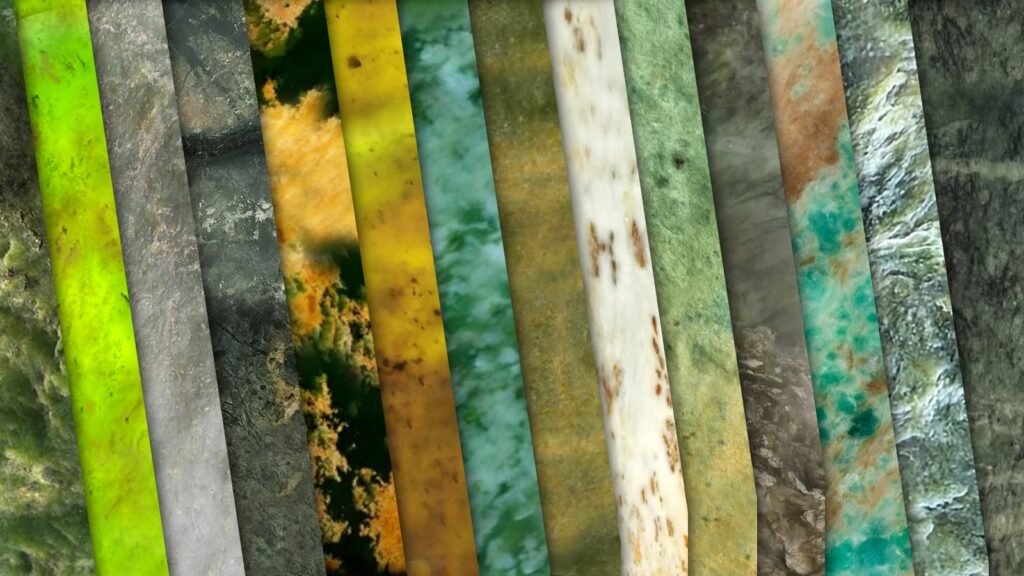
The Arahura River — Heart of New Zealand Pounamu
Of all the rivers associated with pounamu, the Arahura is the most revered. Running west from the Southern Alps to the Tasman Sea near Hokitika, the Arahura has been a source of greenstone for Māori for centuries — and its pounamu was among the most prized in Aotearoa. The river was a destination for expeditions from across the country, and greenstone taken from the Arahura was traded north and south throughout the island.
In Ngāi Tahu tradition, the Arahura River is personified through Poutini — the taniwha, or guardian spirit, associated with pounamu. The legend of Poutini and Waitaiki, in which a woman is transformed into pounamu by the taniwha, is the foundational narrative explaining how greenstone came to exist in Aotearoa. The river is therefore not simply a geological source but a living part of cultural tradition. (read more: History of Pounamu)
Ngāi Tahu and the Guardianship of Pounamu
Pounamu is not simply a natural resource in New Zealand — it is a tāonga, and its guardianship is legally vested in Ngāi Tahu, the principal iwi of the South Island. The Ngāi Tahu (Pounamu Vesting) Act 1997 returned ownership of all pounamu in situ — still in the ground or riverbed — to Ngāi Tahu, recognising the iwi’s role as kaitiaki, or guardians, of the stone and of the landscapes it comes from.
This means that pounamu found in New Zealand riverbeds and natural settings belongs to Ngāi Tahu. The iwi manages collection through licensed commercial operations, and they work to ensure pounamu is sourced and carved in New Zealand, in keeping with the stone’s cultural significance. Any piece sold as genuine New Zealand pounamu should be traceable to this system. (read more: How to Tell if Pounamu is Real)
Pounamu Resources
Explore authentic greenstone carvers, galleries and shops across New Zealand.
How Pounamu Is Gathered Today
Commercial pounamu gathering in New Zealand is conducted under licence from Ngāi Tahu. Much of the stone now collected comes from dedicated operations in the source areas of the West Coast — particularly around the Arahura and nearby river valleys. These operations extract pounamu boulders from alluvial gravels and, increasingly, from in-ground deposits where the stone occurs within the original rock.
The stone emerges covered in a natural skin — a weathered outer layer formed over thousands of years — which conceals the colour and quality within. Experienced gatherers learn to read this skin: its texture, weight, and subtle markings give clues to what lies inside. Each piece must be cut to assess its grade and type, and much of what looks promising on the outside may be cracked or unsuitable for carving. Quality pounamu is a relatively rare yield even from the best sources.
From the Riverbed to the Carver’s Hand
Once gathered and graded, raw pounamu passes to carvers — either directly from Ngāi Tahu-affiliated operations or through licensed dealers. The stone is cut with diamond-tipped saws, shaped on grinding wheels, and finished by hand to a degree of precision and polish that reveals the full depth of its colour and character. The carver’s task is to find the form hidden in the stone, working with its natural markings, colouring, and grain.
Different types of pounamu — kawakawa, kahurangi, tangiwai, īnanga — come from different source areas and carry different qualities of colour and translucency. Kahurangi, the rarest translucent green, is found in very limited quantities and commands the highest value. Tangiwai (bowenite), a different mineralogical type, comes primarily from the Red Hills area of Marlborough. Each type’s character is shaped by the specific geological conditions of the place it formed. (read more: Types of Pounamu)
Every pounamu piece begins its life in a specific part of the Te Wai Pounamu landscape — a riverbed, a mountain face, a glacial valley. That origin is part of what the stone carries with it, wherever it eventually travels. (read more: What Is Pounamu?)
Frequently Asked Questions About Where Pounamu Is Found
Where is pounamu found in New Zealand?
Pounamu is found primarily on the West Coast of the South Island, concentrated in the rivers and mountain ranges of the northwest. The Arahura, Taramakau, Hokitika, and Waitaha rivers are among the most historically significant sources, carrying pounamu boulders from the Southern Alps down to the coastal lowlands. The entire South Island takes its Māori name — Te Wai Pounamu — from the stone.
Is pounamu only found in New Zealand?
Yes — pounamu in its traditional Māori sense is unique to Aotearoa New Zealand. While nephrite jade is found in other countries including Canada, Russia, and China, the specific stone known as pounamu — with its particular geological origins, cultural significance, and Māori name — exists nowhere else on earth.
Who owns pounamu in New Zealand?
Under the Ngāi Tahu (Pounamu Vesting) Act 1997, all pounamu in situ in New Zealand — in riverbeds and natural settings — is legally owned by Ngāi Tahu, the principal iwi of the South Island. Ngāi Tahu acts as kaitiaki, or guardian, of the resource and manages its collection through licensed commercial operations. (read more: How to Tell if Pounamu is Real)
Can you pick up pounamu from rivers in New Zealand?
No — it is not legal to collect pounamu from New Zealand riverbeds or natural settings. Since 1997, all in-situ pounamu has been legally owned by Ngāi Tahu, and removing the stone without authorisation is theft. Genuine pounamu available for purchase has been sourced through licensed operations and is New Zealand-made.
What river is most famous for pounamu?
The Arahura River on the West Coast of the South Island is historically the most significant pounamu source in New Zealand, and the most sacred in Ngāi Tahu tradition. It is associated with Poutini, the taniwha or guardian spirit of pounamu. Other important rivers include the Taramakau, Hokitika, and Waitaha. (read more: History of Pounamu)
What is the rarest type of pounamu and where is it found?
Kahurangi is considered the rarest and most prized type of pounamu — a highly translucent, pure green stone found in very limited quantities in the West Coast river systems. Its even colouring and translucency make it exceptionally valuable. Tangiwai, a different type, comes from the Red Hills in Marlborough. (read more: Types of Pounamu)